AUTO GRILLE PROS
Menu
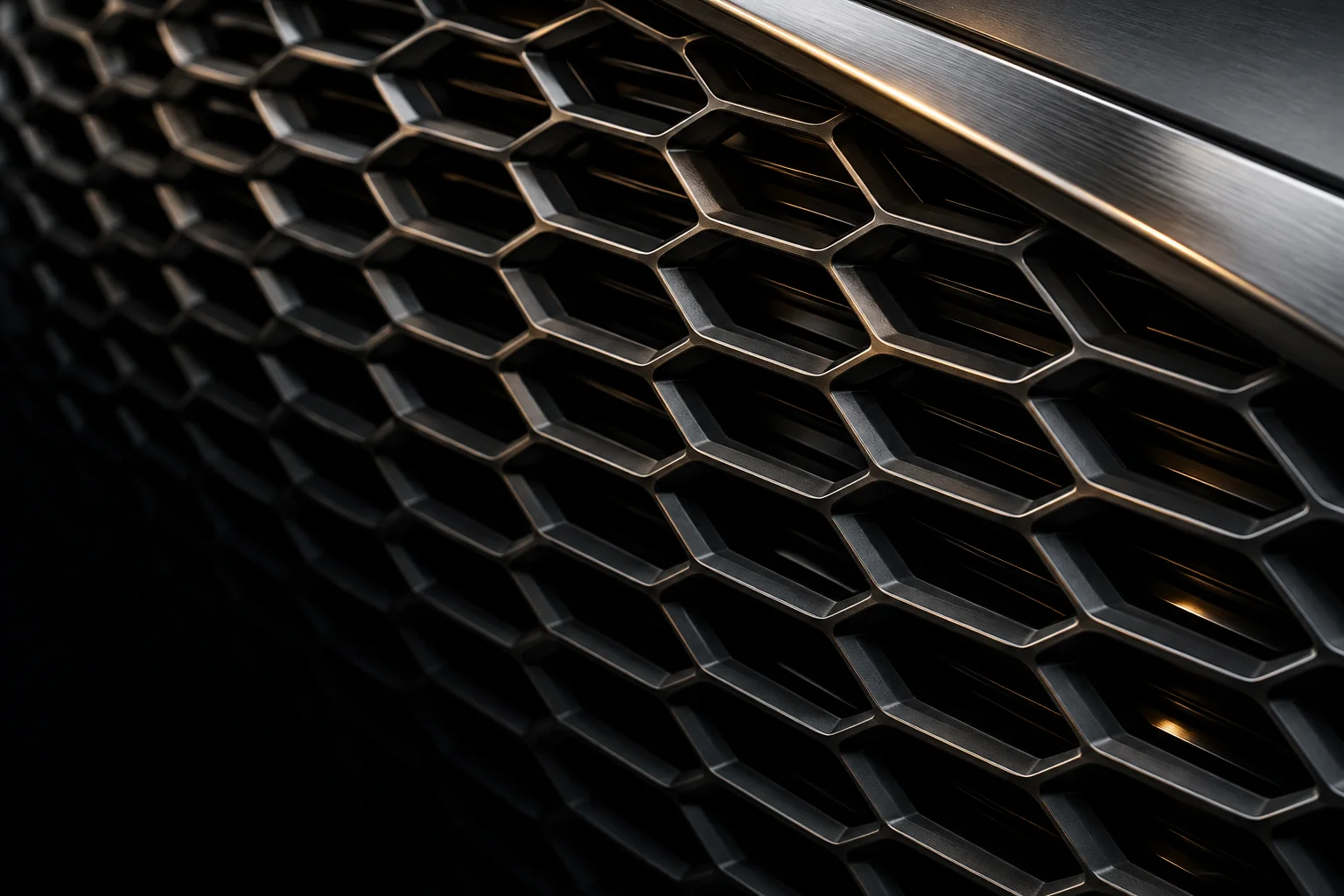
Conceptual close-up of graphite automotive grille mesh

FORM / MATERIAL / FIT

Custom car grilles.
A closer look.

Explore three grille pattern families, the finishes that change their character, and the vehicle details worth confirming before you choose a different front-end look.

Explore the journal
01 / CONCEPTUAL MATERIAL STUDY
Pattern Mesh · Bar · GeometricSurface Bright · Satin · BlackFirst consideration Vehicle-specific fit

01 / THE VISUAL LANGUAGE

One front end.
Three different expressions.

A grille is a small part of a vehicle’s silhouette with a strong visual effect. Compare the pattern at a distance before concentrating on the finish. Scale, spacing, and the surrounding trim all change how the design reads.

A / REPEATING TEXTURE

Mesh

A woven or expanded-metal effect introduces texture across the opening. Fine patterns look more continuous from a distance; larger openings make the structure itself a feature. See an archived El Camino mesh grille description.

B / HORIZONTAL RHYTHM

Bar

Parallel bars emphasize width and create clear lines across the front. Their thickness and spacing can feel restrained or bold. Look at how those lines relate to the headlights and bumper, rather than assessing the grille on its own.

C / DISTINCT OPENINGS

Geometric

Honeycomb and other shaped openings give the surface a pronounced rhythm. The outline of each opening and the depth behind it affect shadows. A dramatic pattern is a styling choice, not evidence of better airflow or a vehicle-specific fit.

02 / BEFORE THE FINISH

The right questions
start with your vehicle.

Two vehicles can look alike and need different grille assemblies. Keep the original vehicle specification beside any part description. A photograph is useful for understanding style, but it cannot settle mounting, sensor clearance, or compatibility.

Read Pro Zone
Identity
Make, model, model year, body style, and trim.
Configuration
Camera, radar, parking equipment, and active shutters where fitted.
Part details
Exact application, included components, dimensions, and supplier documentation.

03 / SURFACE & SUBSTANCE

Finish is what you see.
Material is what it’s made of.

Chrome describes a finish; stainless steel and aluminum describe materials. Painted and coated surfaces add another layer to the comparison. Read both fields in a description instead of inferring construction from shine or color.

Care should follow the finish maker’s instructions. Before selecting a cleaner, confirm that it is suitable for the specific surface. Road residue, weather exposure, and damaged coatings deserve attention; an attractive finish does not remove the need for regular inspection.

Explore Other Upgrades ↗

04 / BEYOND THE GRILLE

Keep your automotive perspective wide.

01BlogArticles and ideas ↗02New RVs and TrailersExplore the category ↗03OtherBrowse the wider archive ↗

05 / THE DETAILS

Good questions.
Clearer choices.

What are custom car grilles?

Custom car grilles are alternatives to the original grille, usually chosen for a different pattern, finish, or front-end appearance. The term describes a broad category rather than a universal fit. A suitable part still depends on the vehicle’s exact specification and the manufacturer’s application details.

Is mesh different from a bar grille?

Yes. Mesh creates a repeating network of openings, while a bar grille uses a series of distinct horizontal or vertical elements. The difference is visual, but opening size and construction also matter. Neither pattern alone tells you whether a grille fits or meets the vehicle’s requirements.

Does the model year tell me everything about fitment?

No. Model year is only a starting point. Trim level, body style, facelift changes, camera placement, radar equipment, and existing grille configuration can affect the part required. Compare the full application information with the vehicle’s documentation before treating a similar-looking grille as a match.

Are chrome and stainless steel the same thing?

No. Chrome usually refers to a surface finish, while stainless steel describes a family of metals. A bright grille may use another underlying material. Read both the material and finish descriptions, because appearance alone does not establish construction, corrosion resistance, weight, or suitable cleaning products.

Will a more open grille improve cooling?

Not necessarily. Visible opening size is only one part of an airflow system that also includes internal ducts, shutters, heat exchangers, and vehicle speed. Appearance is not a reliable performance test. Use vehicle-specific engineering information instead of assuming that a different pattern delivers better cooling.

Can a grille affect cameras or driver assistance sensors?

Yes. Some vehicles have cameras, radar units, or other equipment near or behind the grille. Their positions and surrounding materials can be significant. Confirm the exact equipment configuration and the part maker’s guidance; a qualified professional can explain any inspection or calibration requirements for that vehicle.

How should I compare black and bright finishes?

Compare them against the vehicle’s existing trim in similar light. Gloss black reflects shapes, matte finishes soften reflections, and bright surfaces emphasize edges. Also review the stated coating and care requirements. A finish name or a photograph cannot establish its durability in your driving conditions.

Where can I read more on Auto Grille Pros?

Start with the Blog for articles, or explore Other for the wider archive. The site also includes New RVs and Trailers and individual vehicle-related pages. Treat older descriptions as reading material and independently confirm current product details, availability, and application information with the relevant supplier.
CONTINUE EXPLORING

Look beyond the first impression.

Bring the pattern, material, and exact vehicle specification together. Explore the archive for more automotive reading, then confirm current details at the source.

Browse Other articles ↗